
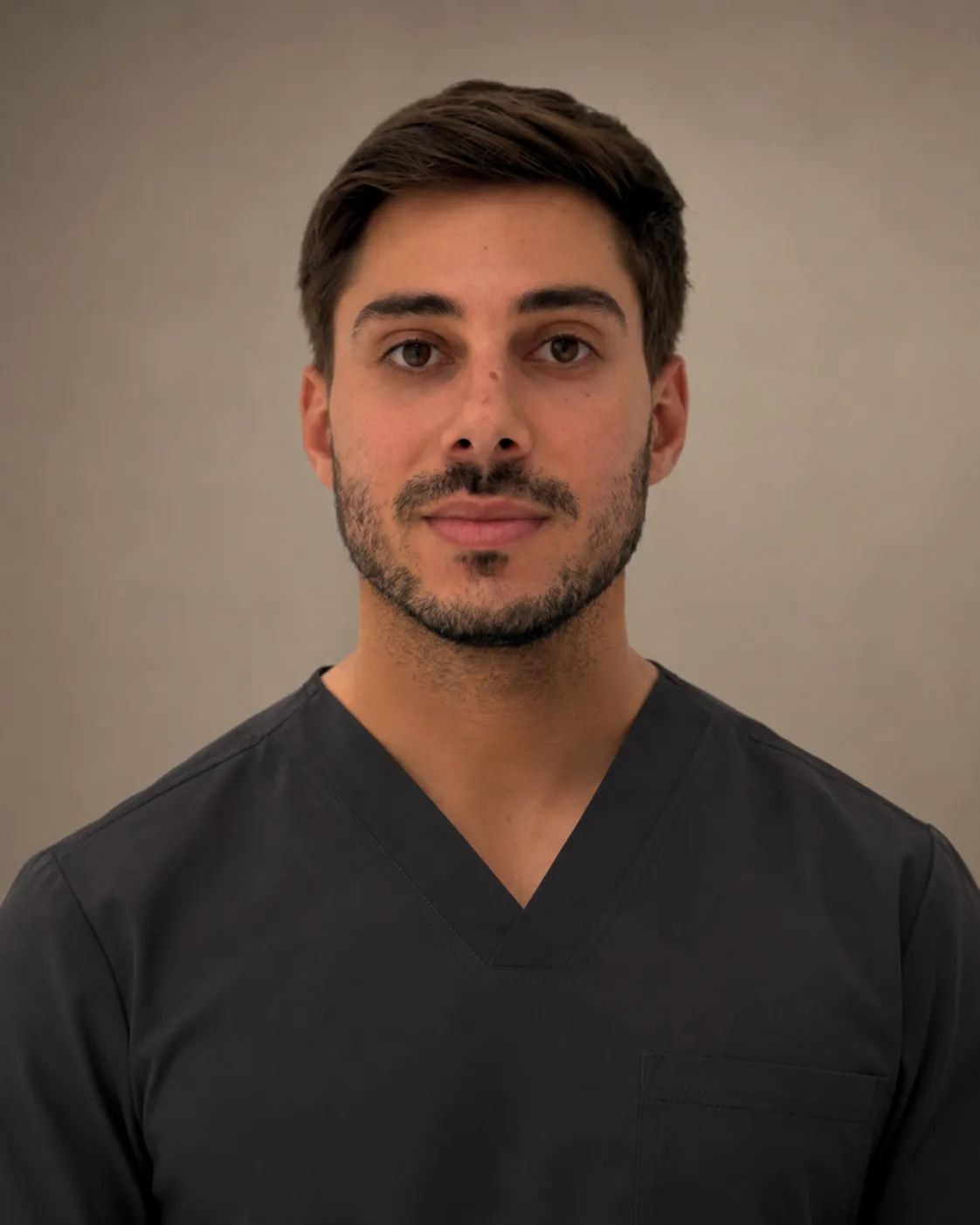
 Medical content reviewed by Dr. Enrico Giorgio Morales Tedone Dermatologist · Medical registration no. 461205707 · Last reviewed 8 August 2026
Similar names — warts, papillomas, molluscum — can describe different lesions with different causes and treatments. At dermaMER Instituto Médico Dermatológico, in Valencia, accurate identification comes first: distinguishing a viral wart, molluscum contagiosum or a skin tag (soft fibroma) changes the approach completely. Following correct diagnosis, we choose the most suitable treatment.
What they are and how they differ
The term «papilloma» is ambiguous. When used to mean a skin tag, it refers to a small benign skin growth rather than HPV infection. The three most common conditions should be distinguished:
Viral warts
Benign growths caused by human papillomavirus (HPV). They are contagious, rough-surfaced and may be common, flat, periungual or plantar warts. Plantar warts may hurt when walking.
Molluscum contagiosum
An infection caused by a poxvirus rather than HPV. It produces smooth, shiny papules with a central depression. It is common in children and people with atopic dermatitis.
Skin tags (soft fibromas)
Benign, soft growths, often on a small stalk, on the neck, armpits, groin, décolletage or eyelids. They are not infections or contagious. Medically they do not require treatment, but are a very common reason for consultation: rubbing against clothing, necklaces or glasses, becoming irritated and sometimes bleeding. Many people develop large numbers in visible areas such as the neck and décolletage. Removal is usually a cosmetic decision and always follows confirmed diagnosis.
Contact with the virus
Papillomavirus (HPV) enters through a small wound.
Cell infection
The virus infects skin cells.
Thickening
The horny layer thickens and forms the lesion.
Visible wart
A wart appears with a rough raised surface.
How they spread and develop
Warts spread through direct contact with infected skin and, less often, damp surfaces; scratching or picking encourages spread to other areas. HPV contact does not always cause a wart: immune response matters. Many disappear naturally over time, although in adults they may persist for years and are more numerous and resistant in immunosuppressed people.
Molluscum contagiosum lives up to its name: it is highly contagious, the main reason to consider treatment. It spreads through direct skin contact, shared objects — towels, sponges, bath toys — and especially self-inoculation: scratching spreads material to surrounding skin, so a few papules may become dozens within weeks. Spread between siblings is common, and atopic skin is more readily affected because its barrier is impaired.
It usually resolves spontaneously, but this may take months or more than a year, during which new lesions continue to appear and transmission remains possible. Treatment shortens this period and limits spread, although lesions already incubating may still appear.
Skin tags are not contagious. Once removed, the same lesion does not usually return, although new ones may develop in friction areas.
Genital warts (condylomata) and sexually transmitted HPV
HPV is the most common sexually transmitted infection. It may cause condylomata in genital, perianal or oral mucosal areas: lesions that are highly contagious. They spread through direct skin contact; condoms reduce but do not eliminate risk because they do not cover every contact surface.
Assessment and treatment are advisable for two reasons.
First, to reduce transmission. While active lesions remain, transmission to partners and self-inoculation to nearby areas are more likely, and condylomata tend to multiply. Removal shortens this period.
Second, condylomata confirm HPV infection and warrant broader assessment. The types causing condylomata are generally not those associated with cancer, but coinfection with high-risk oncogenic types is not uncommon. These types produce no visible lesions and are associated with precancerous lesions of the cervix, anus, penis and oropharynx, detected only through appropriate screening. Consultation therefore goes beyond lesion removal: we examine the area, advise appropriate screening and consider HPV vaccination, also useful in adults against types not yet acquired.
Medical examination is always required. They should not be classified from a photograph or the generic term «papilloma», or treated with pharmacy products or home remedies: a genital skin tag, HPV condyloma and genital molluscum require different assessments and treatments.
This is a more common consultation than often assumed, and we address it with the same straightforwardness and confidentiality as any other.
Wart and papilloma treatment in Valencia
Before treatment, we identify the lesion. Diagnosis is usually clinical, supported by dermoscopy when not entirely typical. Several benign and some malignant lesions can look similar, so histological examination is indicated if diagnosis is uncertain, growth is rapid, bleeding is unexplained, ulceration or irregular pigmentation occurs, or appropriate treatments fail. Acids, cryotherapy and home devices should therefore not be applied to an unidentified lesion.
CO₂ laser
We use this technique to remove a lesion without repeated sessions, when other treatments have failed or in difficult locations. The CO₂ laser vaporises the lesion in a controlled manner, layer by layer, with direct visual monitoring of depth, removing the visible lesion during the procedure.
It is particularly useful for plantar and palmar warts. The horny layer is very thick in these areas: cryotherapy often does not reach the required depth, necessitating repeated sessions over months, while surgical excision leaves a scar in a weight-bearing or gripping area that may hurt when walking or limit hand function.
It also treats several lesions in one session, useful when warts or skin tags have multiplied, and is the technique of choice for neck and décolletage skin tag removal without incisions or stitches.
Immediate removal shortens the period during which a lesion can spread to other areas or people, and prevents scratching, the usual route of self-inoculation. However, no treatment eliminates the virus from surrounding skin, so a new lesion may appear.
Laser treatments and cosmetic lesion removal are not usually covered by insurance policies and are paid for separately. We provide a quote at the assessment consultation before any treatment.
Other options
We also offer supervised home topical treatments, cryotherapy, in-clinic treatments and minor surgery with histological examination. Selection depends on lesion type, age, location and number, and is explained at the assessment consultation.
What can and cannot be achieved
No wart treatment can promise resolution in one session. A treated wart may not respond, may shrink without disappearing or may recur, because removing the visible part does not necessarily remove all infected cells from surrounding skin. With molluscum, treating visible lesions does not prevent those already incubating from appearing in subsequent weeks. No technique can promise freedom from scarring or pigment changes. Removing one skin tag does not prevent new ones: this is neither transmission nor recurrence.
Prevention and when to see a dermatologist
For warts, avoid scratching or picking, sharing razors, files or footwear; wear flip-flops in communal showers and changing rooms and keep skin dry. For molluscum, avoid scratching, squeezing, shaving or hair removal over lesions, do not share towels and cover lesions during contact sports; children need not be excluded from school or swimming if lesions are covered. Skin tags cannot always be prevented, although reducing friction helps.
Never cut, burn or tie off a lesion at home: this risks bleeding, infection and mistakenly treating a different lesion.
Seek advice:
- If diagnosis is unclear.
- For any lesion that grows rapidly, bleeds without injury, ulcerates, changes colour or hardens.
- If it is on the face, eyelids, genitals or beneath nails.
- If a plantar wart prevents normal walking.
- If warts or molluscum are numerous, extensive or resistant.
- If they occur in an immunosuppressed person.
- For any adult genital lesion, to distinguish it from other sexually transmitted infections.
Your first wart consultation at dermaMER
At the first visit, we identify lesion type, assess number and location and use dermoscopy where needed. Diagnosis comes first, then the choice between observation, in-clinic treatment or excision with analysis.
We explain expectations beforehand: the procedure, aftercare, estimated sessions, quote and likelihood of new lesions. For children, we adapt the technique to age, prioritise less uncomfortable options and always assess whether treatment or waiting is best.
These lesions are part of our medical dermatology care in Valencia, available in Spanish, English and Italian. You can meet the medical team before your visit.
Frequently asked questions about warts and papillomas
Are warts contagious?
Yes. HPV can spread through contact and self-inoculation to other areas, so avoid handling warts and have them assessed.
Do they disappear naturally?
Some disappear over time, especially in children, but others persist or multiply. Treatment shortens the process and period of contagiousness.
Why treat a plantar wart with laser?
The sole has a very thick horny layer: cryotherapy often fails to reach sufficient depth and requires repeat sessions for months, while surgical excision leaves a weight-bearing scar that may hurt when walking. Laser allows deeper treatment under visual control and removal during the procedure.
Can neck papillomas be removed?
Yes. Neck «papillomas» are usually skin tags, benign non-contagious lesions. They are removed for discomfort, irritation or cosmetic reasons, and laser can treat several in one session without incisions or stitches. Diagnosis must always be confirmed first.
Can I use pharmacy wart treatments?
They may help some common warts with consistent use and protection of surrounding skin. Avoid them on the face, genitals, young children or undiagnosed lesions.
Are genital warts the same as hand warts?
No. Both are caused by HPV, but usually different types, and management differs. Genital warts are highly contagious and require medical examination: besides treatment, consultation allows assessment for other sexually transmitted infections, appropriate screening and HPV vaccination. They should not be treated with pharmacy products.
Must children’s molluscum always be treated?
Not always, but assessment is advisable. It may resolve naturally, although this takes months and it is highly contagious: scratching causes self-inoculation, turning a few lesions into many, and sibling transmission is common. Treatment or waiting depends on number, extent, itching, secondary infection and each child’s circumstances.
How many sessions are needed?
This depends on technique and lesion. Cryotherapy and topical treatments usually require repeated sessions over time; laser removes the lesion during the procedure, although a new lesion may appear later.
Does health insurance cover it?
Consultation and diagnosis are usually covered, depending on insurer and policy type. Laser treatments and cosmetic lesion removal are not usually included and are paid for separately. We confirm this when you book.
Dermatology consultation for warts and papillomas in Valencia
dermaMER Instituto Médico Dermatológico
Calle Timoneda 4, Bajo, 46008 Valencia
Mon–Wed 9:00–14:00 and 15:00–19:00 · Thu 10:00–14:00 and 15:00–19:00 · Fri 9:00–14:00
☏ +34 960 20 71 71
View on Google Maps