
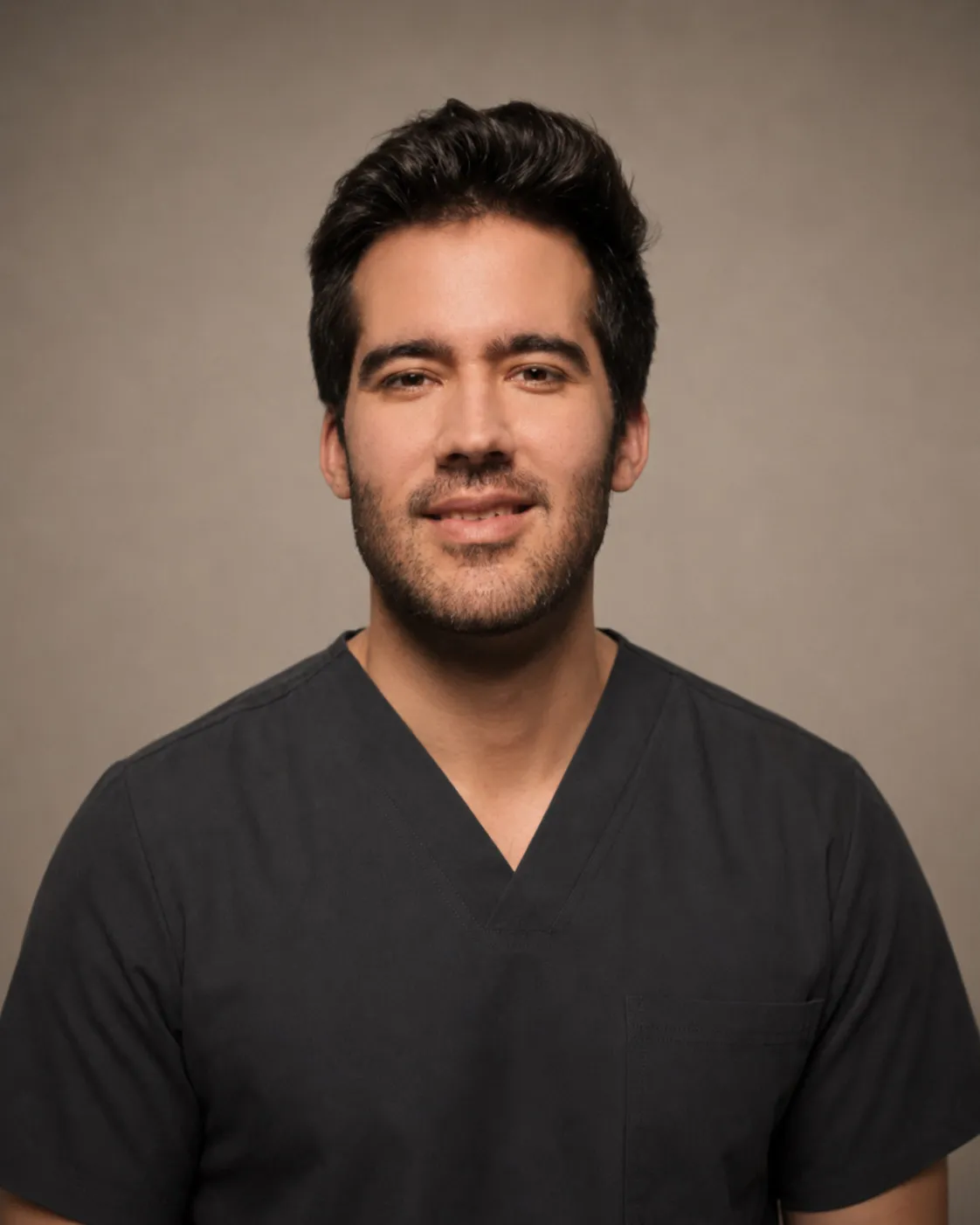
 Medical content reviewed by Dr. Manuel Ballesteros Redondo Dermatologist · Medical registration no. 464625795 · Last reviewed 8 August 2026
Accumulated sun damage often appears as pigmentation, uneven tone, redness and small visible vessels, especially on the face and décolletage.
At dermaMER, we use IPL for face and décolletage photorejuvenation, particularly when addressing sun spots and uneven tone together. When vascular changes predominate, IPL and vascular laser treat visible vessels and some of the characteristic redness of rosacea.
Before treating pigmentation, we confirm its nature. Dermatological assessment distinguishes photoageing from lesions needing another approach. For more severe sun damage, we may consider combined or sequential treatment with other techniques, including CO₂ laser, according to the skin’s characteristics.
What vascular laser and IPL are and how they work
Vascular laser emits light absorbed by haemoglobin and converted into heat inside the vessel, causing coagulation and closure while sparing surrounding skin as much as possible.
Devices differ. Some target fine red vessels and diffuse redness; others penetrate deeper for larger or bluish vessels. Selection depends on vessel diameter, depth and colour, and your skin phototype.
IPL devices do not all offer the same capabilities. At dermaMER, we use equipment selected for vascular lesions, rosacea and photorejuvenation. Beyond the device, results depend on the training of the person setting parameters and performing the procedure: this distinguishes treatment recommended and delivered by a dermatologist.
Visible vessels
Persistent redness and small dilated vessels near the skin surface.
Light reaches the vessel
Haemoglobin absorbs light and converts it into heat inside the vessel.
Coagulation and closure
The vessel coagulates and closes, sparing surrounding skin where possible, and is gradually absorbed.
Settings matched to the vessel
Equipment depends on vessel diameter, depth and colour, and your phototype; there is no single setting.
Face and décolletage photorejuvenation: pigmentation and sun damage
Solar lentigines — brown spots developing over the years on exposed areas — are a main indication for IPL photorejuvenation.
IPL is particularly useful when there is a combination of sun spots, uneven tone and rednessrather than one isolated spot. On the face and décolletage, it allows an overall approach to visible photoageing.
In the following days, some treated spots may darken before gradually fading. The aim is a more even-looking complexion, rather than indiscriminate treatment of every pigmented lesion.
A new lesion, one differing from others or one that has changed needs diagnosis first. Accumulated sun damage may also involve actinic keratoses or skin cancer, requiring specific medical management.
For more marked actinic damage or significant texture changes, we may consider other techniques, including CO₂ laser, within an individualised dermatological strategy that includes treatment of precancerous lesions when present.
Vascular rosacea: treating redness and visible vessels
The condition rosacea can cause persistent redness, visible vessels and flushing episodes. Vascular laser and IPL act on this vascular component, gradually reducing vessel visibility and some redness.
When diffuse redness predominates, IPL can treat broad areas. Besides improving skin appearance, addressing the vascular component may contribute to fewer flare-ups.
It does not cure rosacea or replace dermatological treatment for spots, eye symptoms or other manifestations. At dermaMER, we integrate it into an overall disease management plan.
The procedure, results and sessions
After diagnosis, phototype assessment and photographs, the skin is cleaned and specific eye protection provided for you and staff.
Each pulse feels warm or like a rubber-band snap; cooling reduces discomfort and protects skin. Parameters are adjusted to each vessel: no single setting suits every telangiectasia, and a stronger response means more thermal injury and risk rather than a better result.
For visible facial or décolletage vessels, the usual regimen is one to three sessions around three or four weeks apart.
Results, duration and limitations
Telangiectasia and rosacea redness often improve noticeably after one to three sessions, with responses ranging from almost complete clearing to more modest changes, developing gradually as vessels are absorbed.
Properly closed vessels do not usually reopen, but new vessels may develop because of rosacea, sunlight or predisposition. Results last for a time and usually require maintenance: returning redness does not mean treatment failed. A maintenance session every six months or once a year is recommended.
Photorejuvenation and sun damage
Photorejuvenation has cosmetic value, but its dermatological relevance is broader. Before treatment, we examine sun damage, identify lesions that should not be treated as simple spots and address precancerous lesions with appropriate treatment when present.
For significant sun damage, IPL and CO₂ laser may form part of an overall skin renewal strategy. Skin cancer prevention, however, relies on reducing ultraviolet exposure, sun protection, dermatological monitoring and appropriate treatment of precancerous lesions.
What it cannot do
It does not cure rosacea. It reduces vessels and some redness, improving the condition’s inflammatory environment, but does not remove the tendency to flush or prevent new vessels. Nor does it replace sun protection or medical treatment.
Complete, permanent clearing or an end to flushing with heat, alcohol or exercise cannot be promised.
Risks, phototypes and recovery
Pain during pulses, redness and swelling are expected. Depending on the protocol, purpura may develop: bruising lasting one or two weeks that offers more clearing at the cost of greater visibility. This is discussed with you beforehand.
Darker phototypes require conservative settings and no tanning.
Afterwards, use cooling, moisturising and high-factor sun protection, avoid picking crusts, and avoid sunlight, saunas and strenuous exercise for a few days.
Your first vascular laser consultation at dermaMER
At the first consultation, we examine your face, décolletage or areas of concern and distinguish sun spots, vascular redness, rosacea and other skin lesions.
If you want overall improvement in face or décolletage pigmentation and uneven tone, we may suggest an IPL photorejuvenationprogramme. If vascular rosacea predominates, treatment targets vessels and redness. For more intense sun damage or texture changes needing greater renewal, we assess whether CO₂ laser or other procedures would help.
Assessment also identifies lesions that need investigation or specific medical treatment rather than cosmetic treatment. Before starting, we explain the selected technology, indicative session numbers, recovery and risks.
It is part of our aesthetic medicine and laser service in Valencia, available in Spanish, English and Italian. As a cosmetic treatment, it is not usually covered by health insurance policies and is paid for separately. A registered dermatologist recommends and performs it, with a quote at the assessment consultation. You can check our indicative prices on the Fees page.
You can meet the medical team before your visit.
Frequently asked questions about IPL, pigmentation and vascular laser
Does IPL treat face and décolletage pigmentation?
Yes, for certain previously diagnosed sun spots. It is particularly useful when pigmentation, uneven tone and redness coexist in one area.
Does it hurt?
You feel heat or a rubber-band-like snap, and skin cooling reduces discomfort.
How many sessions do I need?
For facial vessels, one to three sessions around three or four weeks apart.
How long does the effect last?
Closed vessels do not usually reopen, but new ones may develop because of rosacea, sunlight or predisposition. Returning redness does not mean treatment failed.
Does photorejuvenation prevent skin cancer?
No. Dermatological assessment identifies sun damage and precancerous lesions needing specific treatment, but photorejuvenation is not a skin cancer prevention measure. Sun protection and monitoring remain essential.
Why can it be combined with CO₂ laser?
They act differently. IPL particularly targets superficial pigment and vascular changes; CO₂ produces more intensive skin renewal. For selected patients, they may form part of a sequential strategy according to sun damage type.
Can I have treatment in summer or with tanned skin?
Not with tanned skin: melanin competes with haemoglobin and increases burn and pigmentation risk. Summer treatment is possible with strict sun protection and no exposure.
Does it cure rosacea?
No. It reduces vessels and some redness but does not remove the tendency to flush. It may improve the inflammatory environment and contribute to fewer flare-ups.
Does health insurance cover it?
No. Cosmetic treatments are not usually covered by health insurance policies and are paid for separately, with a quote at assessment. The dermatology consultation for rosacea is usually covered, subject to your insurer’s conditions. You can check the insurers we work with.
Dermatology consultation for vascular laser in Valencia
dermaMER Instituto Médico Dermatológico
Calle Timoneda 4, Bajo, 46008 Valencia
Mon–Wed 9:00–14:00 and 15:00–19:00 · Thu 10:00–14:00 and 15:00–19:00 · Fri 9:00–14:00
☏ +34 960 20 71 71
View on Google Maps