
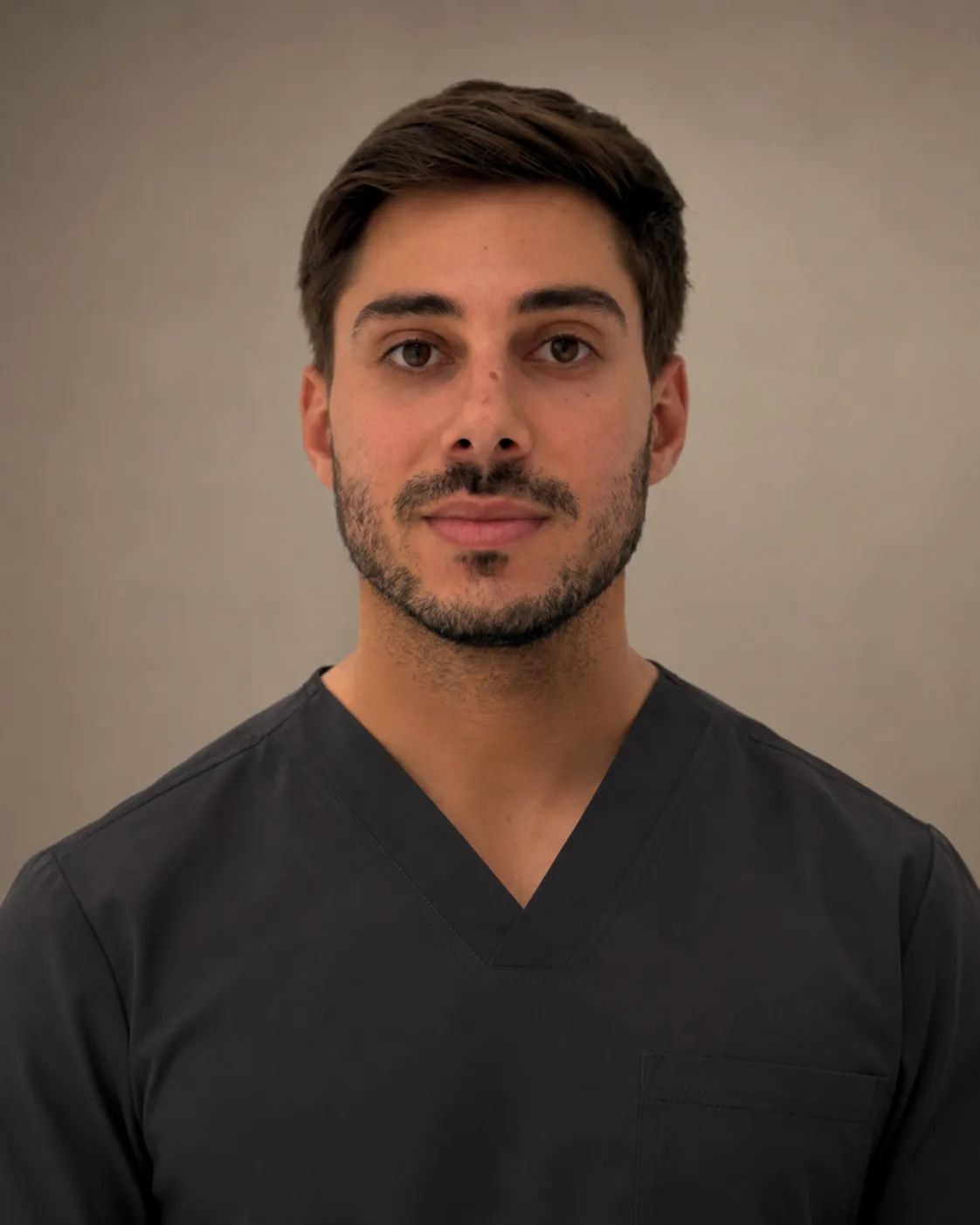
 Medical content reviewed by Dr. Enrico Giorgio Morales Tedone Dermatologist · Medical registration no. 461205707 · Last reviewed 8 August 2026
Scalp mesotherapy involves microinjections into the scalp and may be used as a complementary treatment for various forms of alopecia. In androgenetic alopecia, it is used alongside medical treatment to help slow and reverse progressive follicular miniaturisation; in scarring alopecias such as lichen planopilaris or frontal fibrosing alopecia, it may help control inflammation and attempt to slow disease progression; and in alopecia areata, it may reduce local autoimmune inflammation, among other indications. At the trichology unit of dermaMER Instituto Médico Dermatológico, in Valencia, we always recommend it under dermatological supervision after appropriate correlation of clinical and trichoscopic findings. Each case is assessed individually, integrating mesotherapy into the therapeutic plan as an adjunct to systemic treatment to try to achieve the best possible results.
What scalp mesotherapy is and when it is considered
Mesotherapy describes a technique — multiple superficial microinjections into the scalp — rather than a product. Very different substances are injected under this name: mainly prescription medication supported by scientific evidence, vitamins and peptides.
Research focuses on androgenetic alopecia, always as an adjunct to prescription drug treatments.
One requirement is non-negotiable: it is not started without a diagnosis. «Hair loss» is not a diagnosis. Before injecting, telogen effluvium, alopecia areata or local infection such as tinea must be ruled out: mesotherapy does not regenerate destroyed follicles, but may act on miniaturised follicles, the treatment target in androgenetic alopecia.
Scalp mesotherapy is also currently used as an adjunct for certain inflammatory alopecias. In scarring alopecias such as lichen planopilaris or frontal fibrosing alopecia, it may reduce perifollicular inflammation and help slow disease progression. In alopecia areata, it may also be used to reduce the local autoimmune inflammatory response affecting the hair follicle, always within an individualised approach under dermatological supervision.
Prior diagnosis
No injections without knowing the cause: medical history and digital trichoscopy.
Microinjections
Small volumes through a very fine, short needle into the affected area.
Local deposit
The product is deposited around the miniaturised follicle, the treatment target.
Regimen and monitoring
More frequent sessions initially, then spaced further apart, with clinical review.
How it differs from scalp PRP and microneedling
They are different, even when offered together. Microneedling punctures the skin to stimulate it, without necessarily depositing a product. Scalp PRP injects plasma from your own blood, freshly prepared. Mesotherapy injects an external substance in scheduled sessions, which must be identifiable and traceable. The choice depends on diagnosis, rather than preference for a technique.
What a session involves and how many are planned
A session involves multiple small-volume intradermal injections through a very fine, short needle into the affected scalp area. It lasts about 5 minutes, requires no rest and allows you to return to your activities the same day. Anaesthetic is included in the preparation, so most patients tolerate the session well with only some discomfort.
It causes discomfort and stinging, and a little pinpoint bleeding is common: this is an expected effect of the technique.
There is no universally accepted concentration or number of sessions, so the regimen is determined individually during consultation.
Results cannot be objectively assessed after one session: they are evaluated over several months using standardised photographs and digital trichoscopy.
Results, evidence and limitations
Scientific evidence supports the use of certain medicines through mesotherapy for androgenetic alopecia. However, a study showing benefit from a specific active ingredient does not mean that any «vitamin cocktail» marketed as mesotherapy will achieve the same results. Evidence is more limited and varied for other alopecias, although intralesional injection of certain medicines is also used for inflammatory and autoimmune conditions such as alopecia areata and some scarring alopecias, aiming to reduce inflammatory activity and help slow progression. Assessment by a dermatologist is therefore essential to determine the appropriate indication, active ingredient and regimen according to diagnosis and disease activity.
What it can and cannot achieve
It is offered as an adjunct to an established underlying treatment, with objective review criteria.
It does not restore hair in one session, cure androgenetic alopecia — which is chronic — or change genetic predisposition. It does not restore follicles destroyed by scarring alopecia or replace dermatological diagnosis. Sessions are more frequent initially, then spaced further apart as the condition stabilises. Over months and years, treatment may occasionally be intensified when disease activity is detected.
Risks, contraindications and product control
Discomfort or mild pain and pinpoint bleeding are common.
It should be postponed with active infection, wounds or scalp inflammation, allergy to a component or lack of traceability. The most studied medicine has pregnancy-related contraindications in its product information.
An important regulatory point: cosmetics must not be injected, and an ampoule supplied in a vial or labelled «sterile» is not necessarily authorised; Agencia Española de Medicamentos expressly warns of this. At dermaMER, we therefore inject only identifiable substances with documented concentration and traceability.
Your first scalp mesotherapy consultation at dermaMER
The first visit aims to establish a diagnosis: distinguishing androgenetic alopecia, telogen effluvium, alopecia areata and scarring alopecia. We examine the scalp with digital trichoscopy and take baseline photographs.
Before proposing anything, we explain:
- the diagnosis and alternatives with stronger evidence;
- which substance would be injected, at what concentration and whether use is on-label or off-label;
- the planned number of sessions and their complementary role;
- risks, cost and criteria for assessing the effect.
If you decide against it, we still guide you towards complementary oral or topical treatment. It is part of our hair medicine service in Valencia, available in Spanish, English and Italian, and you can meet the medical team before your visit.
It is not usually covered by insurance policies and is paid for separately. A registered dermatologist recommends and performs it, and we provide a quote at the assessment consultation before any treatment. You can check our indicative prices on the Fees page.
Frequently asked questions about scalp mesotherapy
What results can I expect?
There is evidence in androgenetic alopecia, but results are better when combined with medical treatment, which is why we offer it as an adjunct.
Does it hurt?
Yes, there is discomfort or mild pain. Multiple intradermal injections cause slight stinging, and some pinpoint bleeding is common. We explain this beforehand and combine treatment with anaesthetic to minimise it.
How many sessions do I need?
There is no validated standard number. We decide this during consultation according to diagnosis and review it using comparable photographs. Initially, sessions are more frequent; once hair regeneration has begun, we space them out for maintenance.
How long does the effect last?
As androgenetic alopecia is chronic, any benefit is lost if the underlying treatment is stopped, whether topical, oral or mesotherapy.
Can it replace usual treatment?
No. We always offer it as a selected adjunct within a protocol using treatments with the strongest evidence. For patients who do not want oral or topical treatment because of concerns about adverse effects, it may be considered alone, with its limitations explained.
Is it the same as scalp PRP?
No. PRP injects plasma from your own blood, freshly prepared; mesotherapy injects an external substance in scheduled sessions. The choice depends on diagnosis. Scalp PRP has less evidence in androgenetic alopecia, whereas mesotherapy with the appropriate active ingredient has scientific support.
When can I return to normal activities?
Immediately. Redness and numbness from the anaesthetic are expected for a few hours.
Does health insurance cover it?
No. It is generally a separately paid complementary procedure, with a quote provided at the assessment consultation. The dermatology consultation to investigate hair loss, however, is usually covered, subject to each insurer’s conditions; check the insurers we work with.
Trichology consultation for scalp mesotherapy in Valencia
dermaMER Instituto Médico Dermatológico
Calle Timoneda 4, Bajo, 46008 Valencia
Mon–Wed 9:00–14:00 and 15:00–19:00 · Thu 10:00–14:00 and 15:00–19:00 · Fri 9:00–14:00
☏ +34 960 20 71 71
View on Google Maps