
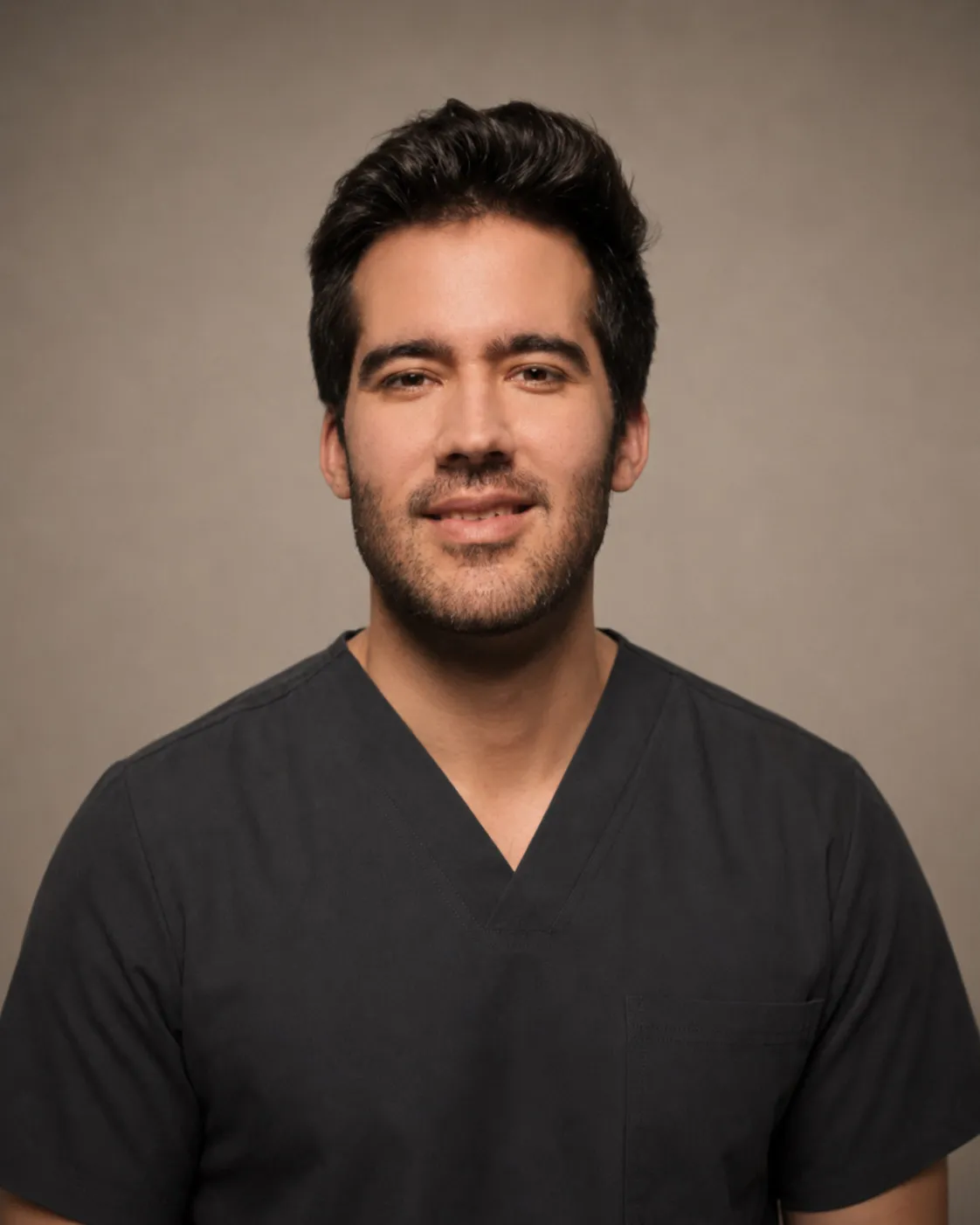
 Medical content reviewed by Dr. Manuel Ballesteros Redondo Dermatologist · Medical registration no. 464625795 · Last reviewed 8 August 2026
Atopic dermatitis is a chronic inflammatory skin condition causing dryness, intense itching and eczema flare-ups. It is very common in childhood but also affects adolescents and adults. At dermaMER Instituto Médico Dermatológico, in Valencia, we approach it as a disorder of the skin barrier and inflammation, rather than simply an «allergy», with a plan combining daily skincare and flare-up treatment tailored to age and severity.
What atopic dermatitis is
«Eczema» is a general term for several inflammatory skin conditions; atopic dermatitis is the most common, with a chronic, relapsing course. It combines three processes: an impaired skin barrier, losing more water than normal and allowing irritants and allergens through more readily; inflammation involving the immune system; and itching, its most characteristic symptom. Scratching briefly relieves it but further damages the barrier and restarts the itch-scratch-inflammation cycle.
Intact barrier
Healthy skin retains water and keeps irritants out.
Impaired barrier
Water is lost and irritants and allergens enter.
Inflammation and itching
Skin becomes red, dry and itchy.
Scratching cycle
Scratching briefly helps but perpetuates the flare-up.
Skin appears dry with red, scaly patches and, during flare-ups, oozing or crusting; in darker skin, redness may look brown or grey. It is not contagious, not caused by poor hygiene and does not automatically mean food allergy.
It can begin at any age and changes location with age: cheeks and scalp in infants, elbow and knee folds in children, and folds, hands, eyelids and neck in adolescents and adults. Many children improve as they grow, others continue with intermittent flare-ups, and first onset in adulthood also occurs.
An important detail: visible extent does not always reflect actual impact. A small eyelid or hand area can be very limiting, and night-time itching affects sleep and mood. We therefore assess how it affects you, as well as how much skin is involved.
Triggers and diagnosis
Diagnosis is clinical, based on itching history, recurrent course, appearance and age-related distribution, and personal and family history. No blood test alone confirms atopic dermatitis.
Triggers or aggravating factors include soaps and detergents, frequent handwashing, dry air, heat and sweating, wool and rough fabrics, scratching, stress and skin infections.
Diet needs precise discussion: we investigate food allergy when immediate, reproducible reactions follow a food, or in infants whose dermatitis does not respond to correct treatment. We do not recommend indiscriminate test panels or exclusion diets without diagnosis, as removing tolerated foods does not cure the condition and may cause nutritional problems.
Atopic dermatitis treatment in Valencia
Treatment is stepwise and tailored to age, location, severity and flare-up frequency. These are not rigid steps: moisturising is usually combined with flare-up treatment and maintenance in recurrent areas to reduce relapse risk.
Daily moisturising
This is the foundation at every severity level. It reduces dryness and the need for anti-inflammatory treatment, but alone does not control an inflamed patch.
Prescription topical treatment
This is the treatment of choice for flare-ups. Different anti-inflammatory options are selected by area, age and severity, in defined regimens with reviews. Some suit delicate areas such as the face, eyelids and folds, and prolonged intermittent use. Frequently relapsing areas benefit from maintenance a couple of days each week after control, helping reduce relapse frequency.
Oozing or crusting does not always mean bacterial infection — atopic skin is often colonised — so routine antibiotics are not recommended without clear infection signs. Antihistamines do not block atopic itching or replace inflammation treatment.
Phototherapy
Narrowband ultraviolet treatment for moderate or severe cases uncontrolled by topical treatment. We do not provide it at the clinic: we assess suitability and advise where to receive it.
Systemic treatments
For moderate or severe disease persisting despite correctly used topical treatment. These require prior assessment and specific monitoring. We assess suitability and support you through the process.
What treatment can and cannot achieve
There is currently no cure. The aim is to control inflammation and itching, restore the barrier and reduce flare-up frequency and severity. Treatment cannot promise freedom from flare-ups after stopping, and skin and sleep do not always improve at the same pace. Two extremes need addressing: moisturisers alone do not control inflammatory flare-ups, while avoiding anti-inflammatory treatment through fear keeps disease active, and continuous unsupervised use has adverse effects. The key is a balanced, sustained plan designed by your dermatologist.
Daily skincare
Much of control lies in the daily routine: apply fragrance-free emollient at least once or twice daily and whenever skin is dry, take short lukewarm baths or showers with a gentle cleanser, pat dry and apply cream within the first few minutes after bathing.
Soft, breathable clothing, avoiding wool against the skin, short nails to limit scratching damage, and controlling heat and sweating help. Atopic skin also needs sun protection with a well-tolerated product.
A written plan — daily applications, products for each area, duration and what to do at flare-up onset — makes adherence much easier, especially for children.
When should you see a dermatologist for atopic dermatitis?
Seek advice:
- If itching or inflammation does not improve after a correct topical regimen.
- If flare-ups are frequent.
- If sleep or daily life suffers.
- If dermatitis is extensive or painful, or affects eyelids, hands or feet.
- If infections recur.
- If you are unsure about treatment safety or quantity.
- If it worsens after cosmetics or workplace products, suggesting additional contact dermatitis.
Your first atopic dermatitis consultation at dermaMER
At the first visit, we review onset, affected areas, itching severity and sleep loss, previous treatments and response, and relevant products and exposures. We examine skin to confirm diagnosis, distinguish active inflammation from dryness or residual pigmentation and rule out other causes.
We then agree a clear plan, review application technique and decide when to assess response.
Atopic dermatitis is part of our medical dermatology care in Valencia, available in Spanish, English and Italian. You can meet the medical team before your visit.
Frequently asked questions about atopic dermatitis
Can atopic dermatitis be cured?
It is chronic and often improves with age: it cannot be cured, but can be controlled and flare-ups made much less frequent. Many children improve markedly over time, although skin may remain sensitive, and follow-up helps manage each stage.
Is it contagious?
No. It is a disorder of the skin barrier and inflammation; it does not spread.
Why is moisturising so important?
Atopic skin loses water and becomes irritated easily; daily moisturising repairs the barrier and reduces flare-ups, even when skin looks well.
Can I bathe my child daily with atopic dermatitis?
Yes, with qualifications: short baths or showers, lukewarm water and a gentle soap-free cleanser. Apply moisturiser immediately afterwards while skin is still damp.
Does stress worsen atopic dermatitis?
It may contribute. Stress does not cause it, but in many people coincides with more flare-ups or itching. Managing stress is part of the plan alongside treatment and daily moisturising.
Should I remove foods from the diet?
Not routinely. Removing foods without confirmed allergy does not improve dermatitis and can unbalance the diet, especially in children. A well-founded suspicion of food allergy is investigated specifically.
Does insurance cover an atopic dermatitis consultation?
Usually, yes: consultation and diagnosis are generally included in health insurance policies, subject to each insurer’s conditions and policy type. Tell us your insurer when booking and we will confirm.
Dermatology consultation for atopic dermatitis in Valencia
dermaMER Instituto Médico Dermatológico
Calle Timoneda 4, Bajo, 46008 Valencia
Mon–Wed 9:00–14:00 and 15:00–19:00 · Thu 10:00–14:00 and 15:00–19:00 · Fri 9:00–14:00
☏ +34 960 20 71 71
View on Google Maps