
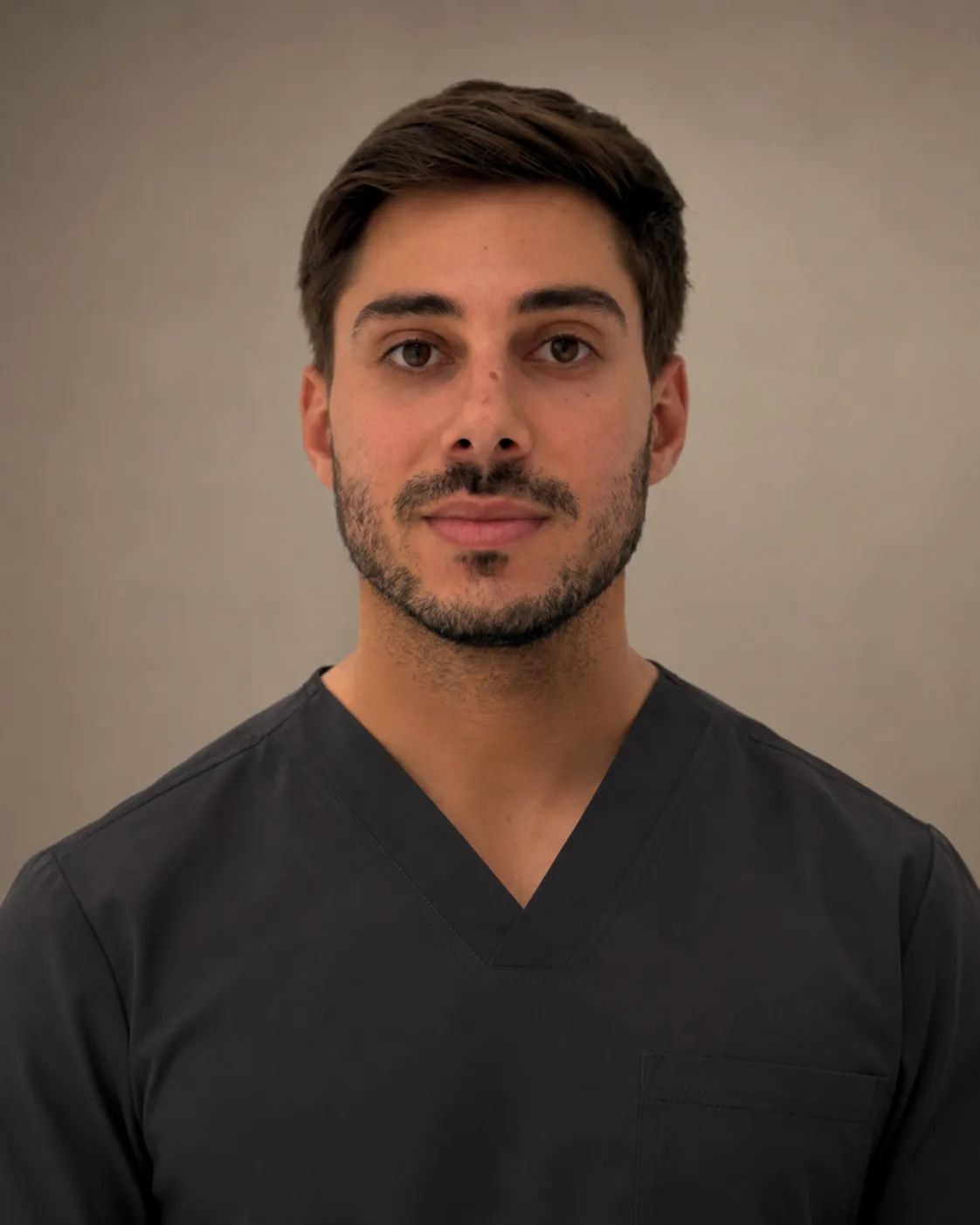
 Medical content reviewed by Dr. Enrico Giorgio Morales Tedone Dermatologist · Medical registration no. 461205707 · Last reviewed 8 August 2026
Sunlight leaves visible skin changes: pigmentation, visible vessels, uneven tone and texture, and other photoageing signs, particularly on the face and décolletage.
At dermaMER, we use intense pulsed light (IPL) and various lasers as key photorejuvenation tools, aimed at improving certain sun spots and achieving a more even-looking tone. When sun damage includes more marked texture changes, we may consider more intensive renewal techniques such as CO₂ laser.
A pigmented lesion needs diagnosis before treatment. Ultraviolet radiation causes more than cosmetic changes: it also produces molecular damage and skin-cell mutations that may accumulate over time and lead to precancerous lesions and skin cancer.
Pigmentation, texture and photorejuvenation
Photoageing involves more than one specific spot. Over time, there may be solar lentigines (sun spots), uneven tone, texture changes, redness and progressively less uniform skin.
The technology IPL, or intense pulsed light, treats broad surfaces, particularly certain sun spots and superficial vascular changes. It is especially useful for face and décolletage photorejuvenation, where several sun-damage signs usually coexist.
When deeper texture changes predominate or more intensive renewal is needed, other procedures may be considered, including CO₂ laser. Selection depends on the predominant photoageing component.
Pigmented lesion diagnosis
Diagnosis before treatment: dermoscopy and exclusion of recent tanning.
Light acts on pigment
IPL treats broad surfaces, targeting certain sun spots and superficial vascular changes.
Darkening and shedding
Spots usually darken immediately afterwards and shed as fine crusts within around five to ten days.
Sun protection and monitoring
Sunlight causes new spots: sun protection, maintenance and dermatological monitoring of damaged skin.
Sun damage: beyond pigmentation
Accumulated ultraviolet exposure produces visible photoageing changes, but also molecular damage and mutations in skin-cell DNA. Most changes do not become cancer, but their accumulation explains increased risk of actinic keratoses — precancerous lesions — and skin cancer.
We therefore distinguish two goals. The first is cosmetic: improving sun spots, uneven tone and certain texture changes. The second is dermatological: examining sun-damaged skin and identifying lesions that should not be treated as simple spots.
A new, asymmetrical lesion, one differing from others or one that has changed is investigated first. A lentigo maligna — an early form of may be mistaken for a sun spot.
The condition melasma differs: it is not simply accumulated sun damage and needs a specific approach based on sun protection and medical treatment. IPL should not be used indiscriminately on any pigmentation.
IPL and CO₂ laser: different photorejuvenation treatments
The technology IPL is particularly useful when sun spots, uneven tone and superficial vascular changes predominate across broad areas such as face and décolletage.
The CO₂ laser produces more intensive skin renewal and may be considered for texture changes or photoageing requiring deeper treatment.
They are not interchangeable. In selected patients, they may form part of a sequential photorejuvenation strategy.
The procedure and number of sessions
We start with assessment: examination, dermoscopy of pigmented lesions, phototype and exclusion of recent tanning. An uncertain lesion is biopsied or monitored; laser is not tried simply to see whether it disappears.
Skin is cleaned, make-up and self-tanner removed, and specific eye protection used for you and staff. You feel heat or small impacts, and spots usually darken immediately afterwards.
IPL photorejuvenation is usually gradual. Session numbers depend on pigmentation extent, vascular changes, phototype, area and individual response.
For texture changes needing greater renewal, we assess whether CO₂ laser or other procedures are appropriate and how to sequence them.
Results, duration and limitations
Carefully selected solar lentigines may lighten noticeably. IPL also addresses uneven tone and certain photoageing componentsoverall, particularly with multiple spots across the face or décolletage.
The aim is more even-looking skin, rather than spot-free skin or complete reversal of years of damage. CO₂ laser serves a different role when more intensive texture remodelling is needed.
A treated spot may remain lighter for months or years, but sunlight creates new spots and encourages pigment return, so duration cannot be promised. Results are assessed with photographs in the same lighting, without filters.
What it cannot do
Photorejuvenation improves visible changes but does not reverse all accumulated skin-cell damage. Nor does it prevent new spots or lesions if sun exposure continues.
Cosmetic IPL should form part of an individualised dermatologist-designed protocol. Prevention relies on reducing ultraviolet exposure, sun protection and dermatological monitoring and treatment of relevant lesions.
These treatments must not be used on undiagnosed pigmentation: lentigo maligna may resemble a lentigo, and laser destroys the lesion, delays biopsy and creates false reassurance. Melasma may worsen.
Complete clearing, a single session or freedom from pigment changes and relapse cannot be promised.
Risks, phototypes and recovery
Heat, redness, swelling, temporary spot darkening and fine crusts shedding within around five to ten days are expected.
Darker phototypes have greater burn and pigmentation risk: conservative settings and sometimes a test patch are used. Treatment should be postponed or avoided with uncertain diagnosis, recent tanning or self-tanner, active infection or herpes, unstable melasma or pregnancy.
Aftercare involves not picking crusts, moisturising and strict sun protection.
Your first pigmentation consultation at dermaMER
Suitable candidates have benign solar lentigines and pigmented sun damage, accept partial clearing and are willing to protect against sunlight. Those with undiagnosed pigmentation, unstable melasma, tanned skin or expectations of no future spots are unsuitable.
An advantage of photorejuvenation at a dermatology institute is that we combine aesthetics with diagnosis of sun-damaged skin.
We assess pigmentation, tone, texture and vascular changes, but also examine lesions needing monitoring or specific investigation. We then design a plan for more uniform skin and improved overall appearance, using IPL and, when indicated, combining or sequencing it with CO₂ laser or other procedures.
We explain reasonable results, indicative session numbers, recovery and the importance of maintenance and sun protection.
It is part of our aesthetic medicine and laser service in Valencia, available in Spanish, English and Italian. As a cosmetic treatment, it is not usually covered by health insurance policies and is paid for separately. A registered dermatologist recommends and performs it, with a quote at assessment.
You can meet the medical team before your visit.
Frequently asked questions about pigmentation and rejuvenation
What results can I expect?
Carefully selected lentigines may lighten noticeably, and IPL also improves uneven tone for a more uniform overall appearance. Deep texture changes need other techniques.
Does it hurt?
You feel heat or small impacts, tolerable in most cases. Specific eye protection is used for you and staff.
How many sessions do I need?
This depends on pigmentation extent, area, phototype and other photoageing signs. IPL treatment is gradual and reassessed before further sessions are decided.
How long do results last?
A spot may remain lighter for months or years, but sunlight creates new spots and encourages pigment return. Results last less without sun protection.
When can I return to normal activities?
Immediately. Redness, temporary darkening and fine crusts that shed within five to ten days are expected; do not pick them.
Can I have treatment in summer or with tanned skin?
Not with tanned skin or recent self-tanner: burn and pigmentation risk increases considerably. Summer treatment is possible but requires avoiding sun exposure before and afterwards.
What if I have a spot I cannot identify?
It is investigated before treatment. We examine with dermoscopy and, if uncertain, use photographic monitoring or biopsy. Laser is never tried simply to see whether it disappears: this would destroy the lesion and delay diagnosis.
Does health insurance cover it?
No. Cosmetic treatments are not usually covered by health insurance policies and are paid for separately, with a quote at assessment. Assessment of an uncertain pigmented lesion is a dermatology consultation and is usually covered, subject to your insurer’s conditions. You can check the insurers we work with.
Dermatology consultation for pigmentation and rejuvenation in Valencia
dermaMER Instituto Médico Dermatológico
Calle Timoneda 4, Bajo, 46008 Valencia
Mon–Wed 9:00–14:00 and 15:00–19:00 · Thu 10:00–14:00 and 15:00–19:00 · Fri 9:00–14:00
☏ +34 960 20 71 71
View on Google Maps