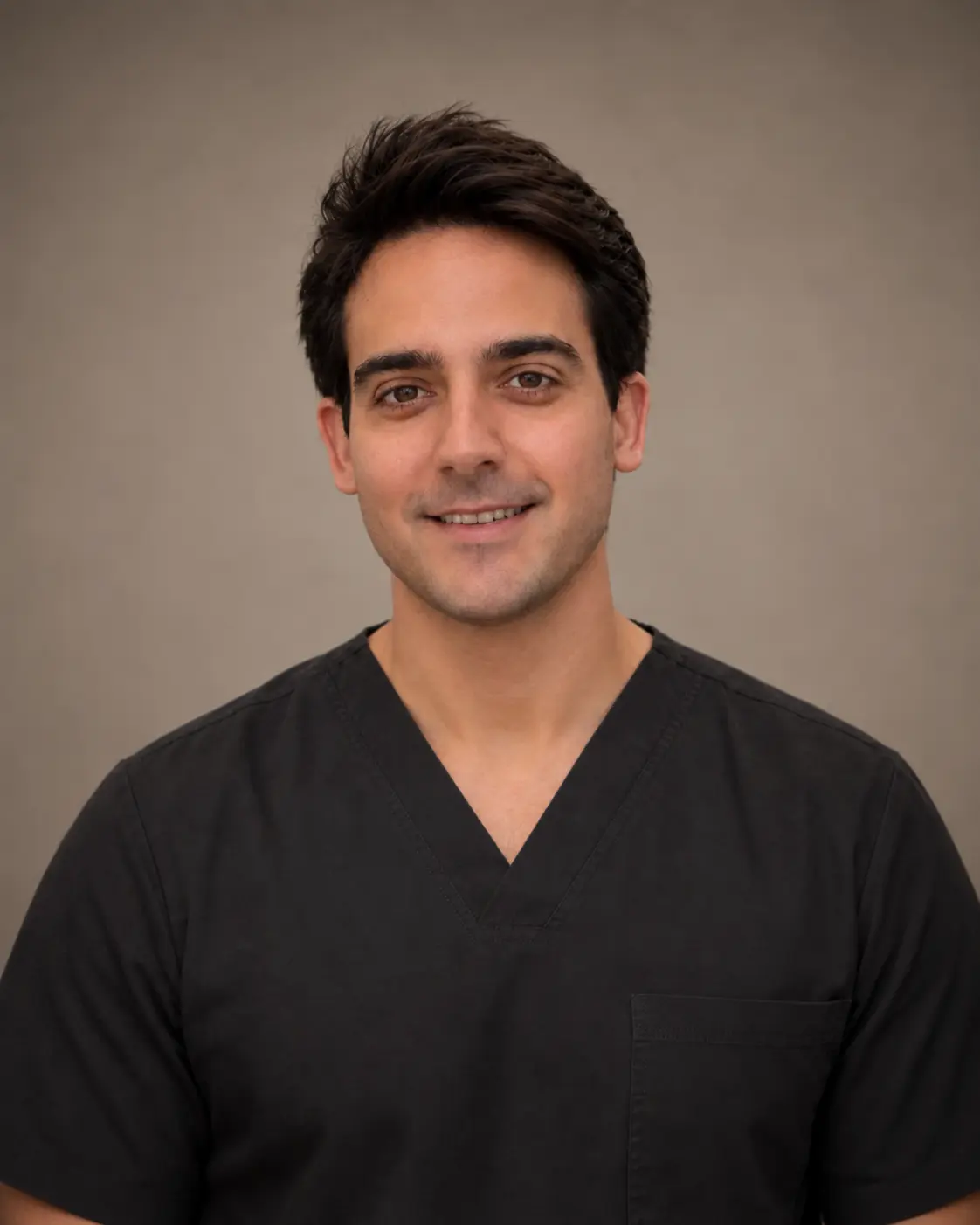
 Medical content reviewed by Dr. Román Ballesteros Redondo Dermatologist · Medical registration no. 462009018 · Last reviewed 8 August 2026
Mohs micrographic surgery is a technique for removing certain skin cancers with microscopic assessment of almost all margins before reconstruction. Its advantage is twofold: high oncological precision and the greatest possible preservation of healthy skin, making it particularly valuable on the face and for certain tumour types. At dermaMER Instituto Médico Dermatológico, in Valencia, we recommend it when it offers a real benefit, rather than as a technique for every lesion.
How it differs from conventional excision
In a conventional excision , the tumour is removed with a predetermined margin of healthy skin and sent for analysis. Representative sections of the specimen are examined and, if a margin is involved, a second operation may be needed. In Mohs surgery, the tissue is oriented and mapped, and almost the entire margin is examined. If tumour remains, another layer is removed only from the area where it persists, repeating the process until clear margins are confirmed. This is not «margin-free» surgery: it begins with a narrow margin, which is extended only where the microscope indicates.
The tumour is marked
The lesion is marked before the procedure.
Removal in layers
A thin layer of tissue is precisely removed.
Margin examination
The mapped margins are examined under the microscope.
Clear margin and reconstruction
Once the margin is confirmed clear, reconstruction preserves healthy skin.
Which tumours it is indicated for
Its main indications are high-risk basal cell carcinoma and squamous cell carcinoma: recurrent tumours, poorly defined tumours, more aggressive subtypes or those in locations where tissue preservation is especially important — nose, eyelids, lips, ears or temples. The decision combines size, subtype, border definition, whether the tumour is primary or recurrent, and the actual need to preserve tissue. For melanoma , it is not the usual technique and is reserved for selected cases.
What it can and cannot achieve
The main advantage is thorough microscopic margin control before reconstruction, reducing the likelihood of leaving tumour extensions invisible to the naked eye. The second is selective preservation of healthy tissue: further removal targets only areas containing tumour, which is crucial on the eyelids, nose or lips.
The limitations need precise explanation. «Maximum tissue preservation» does not mean the wound will be small, because the final defect may be larger than the visible tumour if there were microscopic extensions. The very high cure rates sometimes advertised depend on tumour type and follow-up; they are not a universal figure. The technique does not treat metastases or disseminated disease, does not replace sentinel lymph node assessment when indicated for melanoma, and cannot promise freedom from recurrence or a particular scar appearance.
Risks and recovery
As with any surgery, there may be pain, bleeding, bruising, infection, wound opening or changes in scarring and pigmentation, and, depending on the area, numbness or other discomfort.
All surgery leaves a scar: Mohs preserves tissue but does not eliminate scarring or allow its appearance to be predicted. Swelling and bruising are more noticeable in the first few days, particularly around the eyes and nose, and the scar matures over months. Do not stop anticoagulants or antiplatelet medication yourself: this decision is assessed individually.
During your consultation, we explain in detail how the procedure works, how reconstruction is planned and the care your case requires.
Your first Mohs surgery consultation at dermaMER
At the preoperative consultation, we review the biopsyreport, the exact lesion location and your medical history — including anticoagulant medication — examine the tumour and confirm that Mohs is indicated, explaining the alternatives and recurrence risk. If the lesion is no longer clearly visible after biopsy, an earlier photograph helps us locate the treatment area accurately.
Mohs surgery is part of our surgical dermatology and skin cancer care in Valencia, available in Spanish, English and Italian. You can meet the medical team before your visit.
Frequently asked questions about Mohs surgery
Why is Mohs surgery so precise?
Because almost the entire margin of the removed tissue is examined, rather than just representative sections. The specimen is also mapped: if tumour remains, its location is known.
Does it hurt or require a hospital stay?
It is performed under local anaesthetic as an outpatient procedure; a hospital stay is not usually needed.
Which tumours is it used for?
Mainly certain skin cancers in delicate areas such as the face, where curing the tumour and preserving tissue both matter. The dermatologist assesses suitability.
What happens if the margin is not clear?
Another layer is removed only from the affected area and examined again, as many times as necessary. This is what distinguishes the technique: reconstruction waits until clear margins are confirmed.
Does it leave a large scar?
It preserves as much healthy tissue as possible, and reconstruction is planned according to the area. All surgery leaves a scar, although the technique helps keep it smaller.
Does health insurance cover Mohs surgery?
As a skin cancer treatment, it is usually covered by health insurance policies when indicated, subject to the insurer’s conditions and policy type. Check the insurers we work with.
Dermatology consultation for Mohs surgery in Valencia
dermaMER Instituto Médico Dermatológico
Calle Timoneda 4, Bajo, 46008 Valencia
Mon–Wed 9:00–14:00 and 15:00–19:00 · Thu 10:00–14:00 and 15:00–19:00 · Fri 9:00–14:00
☏ +34 960 20 71 71
View on Google Maps