
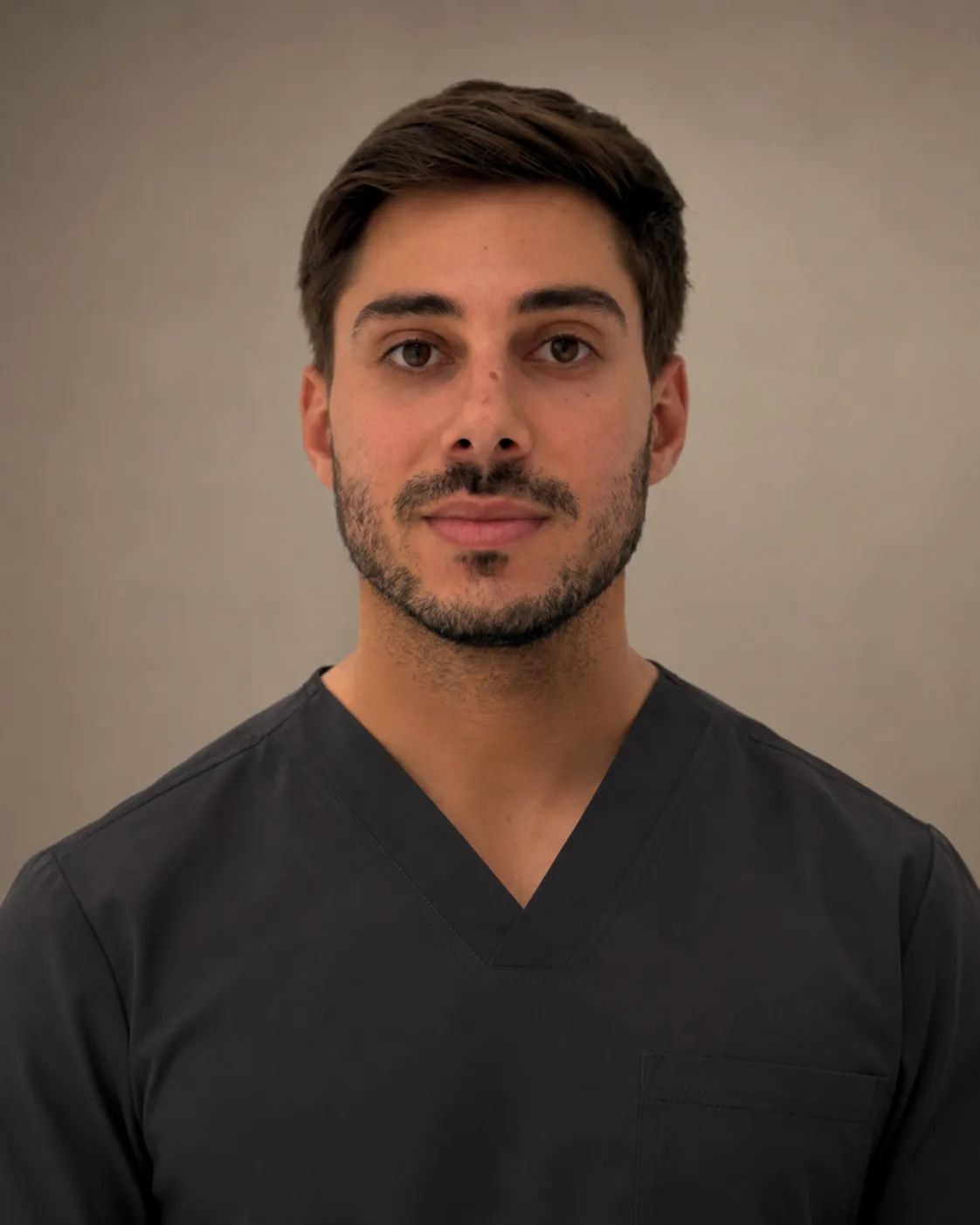
 Medical content reviewed by Dr. Enrico Giorgio Morales Tedone Dermatologist · Medical registration no. 461205707 · Last reviewed 8 August 2026
Collagen biostimulators are injectable implants that encourage the skin to produce collagen progressively rather than simply providing immediate filling. They improve firmness and skin quality in mild or moderate laxity, with gradual results. At dermaMER Instituto Médico Dermatológico, in Valencia, we recommend them with medical judgement and realistic expectations, explaining their differences, limitations and an important safety detail: unlike hyaluronic acid, they cannot be dissolved with an enzyme.
What they are and how they work
These biocompatible, absorbable materials generate a controlled tissue response when injected, stimulating fibroblasts to form the body’s own collagen. The common myth that “biostimulator means no filling” needs qualification, as it is not entirely true and depends on the product:
- Poly-L-lactic acid (PLLA): its effect is mainly gradual. The volume seen immediately afterwards comes from fluid and is absorbed within days; what remains is collagen formed over time.
- Calcium hydroxylapatite (CaHA): its gel provides immediate support and volume, and also stimulates collagen. When diluted or highly diluted, the aim is skin quality rather than volume.
- Polycaprolactone (PCL): both a filler and stimulator: the gel adds immediate volume and microspheres gradually induce collagen.
They differ from hyaluronic acid in one key respect: no enzyme can dissolve them quickly, so overcorrection, nodules or complications are harder to reverse. These medical devices must have CE marking, an authorised distribution channel and traceability; the batch and original packaging are a safety matter rather than a formality.
Absorbable material
Biocompatible, absorbable materials with CE marking, authorised supply and batch traceability.
Injection into the appropriate layer
After assessment, photographs and antisepsis, injection uses a needle or cannula with topical anaesthetic.
Tissue response
A controlled tissue response stimulates fibroblasts to form the body’s own collagen.
Gradual, across several sessions
Results are not immediate: several sessions are usually needed, with review after remodelling ends.
What they are used for
Realistic indications are mild to moderate loss of support and volume, mild to moderate skin laxity, and improvement in skin firmness, thickness and elasticity. They are used on the face and, with selected products and dilutions, on areas such as the neck, décolletage or certain body areas. Some regions require particular caution because of vascular anatomy — glabella, nose, forehead, nasolabial fold and eye contour — and lips or the periocular area are not interchangeable with cheeks. Many body applications and specific dilutions rely on small studies and expert consensus rather than large trials.
Materials are not interchangeable: the choice depends on your goal, area, skin quality and whether you want immediate support alongside the gradual effect. There is no “best” biostimulator for everyone, and claims otherwise deserve caution. Nor should it be applied “just in case”: we recommend it for an actual firmness or support concern that may benefit, and rule it out when another approach is appropriate, such as filler for volume replacement or surgery for marked laxity.
Treatment and number of sessions
We first identify what predominates — volume loss, laxity, tissue descent or excess skin — as these respond differently. After assessment, photographs and antisepsis, the product is injected with a needle or cannula into the appropriate layer, using topical anaesthetic or a product containing lidocaine, with monitoring during and afterwards. Session numbers depend on the material: PLLA is usually given in two or three sessions around three or four weeks apart, avoiding overcorrection because collagen continues increasing afterwards; CaHA and PCL are often assessed after one session before adding more. Aftercare (such as massage) differs between products. We do not automatically combine a biostimulator with laser, peels or radiofrequency in one session without assessing safe sequencing and intervals.
Results and duration: what can and cannot be achieved
Actual improvement is gradual: with PLLA, initial volume is absorbed and results appear over subsequent weeks and months as collagen is deposited; CaHA and PCL provide an immediate gel effect plus later remodelling. Indicative duration ranges from around twelve months to roughly two years depending on product and area, but declines gradually and cannot be promised individually. There is no compulsory fixed schedule: we review after remodelling is complete, and repeating too soon increases overcorrection and nodule risk. A microscopic increase in collagen does not automatically mean visible cosmetic improvement, and robust evidence does not establish one material as superior for every patient.
What they cannot do
They do not stop ageing or restore all lost collagen. They do not reposition sagging tissues, remove significant excess skin or correct severe laxity: they do not replace surgery when indicated, and the term “liquid facelift” is misleading. They do not treat pigmentation, rosacea, pores, deep scars or movement-related wrinkles. Perfect symmetry, freedom from lumps, an exact session count or fixed duration cannot be promised. An important safety point: as they cannot be dissolved with hyaluronidase, managing overcorrection or a nodule requires observation, medication, ultrasound-guided procedures or, in selected cases, surgery, with uncertain results.
Risks and contraindications
Common effects include redness, swelling, bruising, tenderness or temporary asymmetry. The most characteristic adverse effect is nodules: these may be non-inflammatory (product accumulation or superficial placement) or inflammatory (infection or reaction), and may appear months or years later as granulomas; we always rule out infection first. As with any facial injectable, there is also an uncommon but serious risk of vascular occlusion, particularly complex here because the product cannot be dissolved immediately. Treatment should be postponed during pregnancy and breastfeeding, with active infection or inflammation in the area, known allergy, a history of keloids (a contraindication for PLLA) or active autoimmune disease. Darker skin phototypes are not contraindicated, but bruising or inflammation may leave more pigmentation.
Your first biostimulator consultation at dermaMER
A suitable candidate is an adult with mild to moderate volume or firmness loss who understands that results are gradual, several sessions may be needed and the product does not dissolve like hyaluronic acid. Someone seeking surgical results, with severe laxity or previous filler complications is unsuitable. During consultation, we assess the concern, record any previous implants (product, area and date), and explain the material, purpose, session count, gradual results and risks, including the lack of enzymatic reversal. We always check that products are authentic and from authorised suppliers. Biostimulators are part of our aesthetic medicine and laser service in Valencia, available in Spanish, English and Italian.
You can meet the medical team before your visit.
As a cosmetic treatment, it is not usually covered by insurance policies and is paid for separately. A registered dermatologist recommends and performs it, and we provide a quote at the assessment consultation before any treatment. You can check our indicative prices on the Fees page.
Frequently asked questions about collagen biostimulators
How long before results are visible?
They are gradual by definition: what you see in the first few days comes from the product’s fluid and is absorbed. Your own collagen forms over weeks, and results are assessed from the second or third month using comparable photographs.
How many sessions do I need?
This depends on the material, area and starting point. Usually more than one session is needed, several weeks apart, followed by maintenance. The number is decided according to response rather than in advance.
How long does the effect last?
It varies by product and individual. It is not permanent: newly formed collagen is lost over time, like your existing collagen, so maintenance is considered. An exact duration cannot be promised.
Does it hurt?
It is generally well tolerated. Cooling or anaesthetic cream is used, and many products contain anaesthetic. Swelling, redness or bruising for a few days afterwards is normal.
Can it be reversed if I do not like it?
Not like hyaluronic acid. No enzyme dissolves these materials quickly, so we prefer a conservative approach: adding at a second session is easier than correcting excess.
Can I have treatment in summer?
Yes, it is not sunlight-dependent in the way laser treatment is. Even so, daily sun protection and avoiding direct sunlight while swelling or bruising remains are advisable.
When can I return to normal activities?
Immediately for everyday life. For the first 24-48 hours, avoid strenuous exercise, intense heat and massaging the area unless we advise otherwise.
Does health insurance cover it?
No. It is generally a separately paid cosmetic treatment, with a quote at the assessment consultation. Check the insurers we work with if your question concerns another dermatology consultation.
Dermatology consultation for collagen biostimulators in Valencia
dermaMER Instituto Médico Dermatológico
Calle Timoneda 4, Bajo, 46008 Valencia
Mon–Wed 9:00–14:00 and 15:00–19:00 · Thu 10:00–14:00 and 15:00–19:00 · Fri 9:00–14:00
☏ +34 960 20 71 71
View on Google Maps